
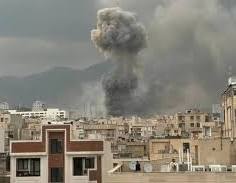
Tehran was rocked by a fresh wave of explosions today, as US President Donald Trump said the war with Iran could be over in two or three weeks.
The conflict began when the United States and Israel launched airstrikes across Iran that killed supreme leader Ayatollah Ali Khamenei, quickly mushrooming into a regional war that has sent oil and gas prices soaring and threatened to torpedo the global economy.
But Trump, whose statements on the war have swung from combative to conciliatory, said late Tuesday that the fighting could be over in “two weeks, maybe three”.
The White House said he would give “an important update on Iran” to the nation at 9:00 pm Wednesday (0100 GMT Thursday).
Tehran has insisted there are no ongoing negotiations, and that it has not responded to a reported 15-point proposal from Washington to end the war.
But Iranian President Masoud Pezeshkian said the Islamic republic had the “necessary will” to end the war, provided its enemies guaranteed it would not flare up again.
With the status of diplomatic efforts uncertain, Iranian state television reported that Tehran was under attack on Wednesday, and explosions were heard in the capital.
An AFP journalist said strikes hit an area near the former US embassy — which was transformed into a museum known as the “Den of Spies” and has become a symbol of the decades-long animosity between Tehran and Washington.
Strikes also hit steel complexes in central and southwest Iran, according to Iranian media, causing “significant damage and destruction”.
The Israeli military confirmed it had carried out the strikes, while it also intercepted an Iranian missile attack which medics said wounded 14 people including an 11-year-old girl.
Israel also said Wednesday its air defences had responded to a missile fired from Yemen — the third attack by the Iran-backed Houthi rebels since they entered the war over the weekend.
– ‘Nobody knows what’s happening’ –
Thousands of people have been killed throughout the region during the conflict, which has displaced millions more from their homes.
In Lebanon, seven people were killed in strikes around south Beirut, the health ministry said Wednesday, while the Israeli military said it had struck a senior Hezbollah commander.
A Lebanese security source and a Hezbollah source both told AFP that the strike had killed Hezbollah’s top commander for Iraq military affairs, Yousef Hashem.
AFP correspondents at the site saw a blackened, debris-strewn street.
“Nobody knows what’s happening,” resident Hassan Jalwan told AFP, adding that “displaced people have been sleeping in the open” in the area.
Lebanon was drawn into the war on March 2 when Tehran-backed militant group Hezbollah launched attacks on Israel.
US allies in the Gulf have also been pulled into the war, with Iran carrying out retaliatory attacks on nations it says have been launchpads for strikes.
A Bangladeshi national was killed Wednesday by falling shrapnel from an intercepted drone in the United Arab Emirates.
Kuwait said its international airport had come under Iranian drone attack that led to “a large fire” at its fuel tanks, while the National Bank of Kuwait said it will close its headquarters for two days “in the interest of everyone’s safety”.
Elsewhere, Bahrain’s interior ministry said a fire broke out at a business facility “as a result of the Iranian aggression”, and Saudi Arabia said several drones were intercepted.
A tanker was also hit in the waters off Qatar, a British maritime security agency said, reporting damage but no casualties.
“Every day, we hear the sound of drones,” Waad Abdulrazaq, a 31-year-old truck driver, told AFP near Iraq’s Erbil international airport, which has faced regular attacks by pro-Iran groups.
“We hear them in the morning, and we hear them at night. We can no longer sleep or live in peace.”
